




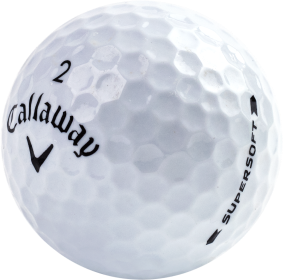
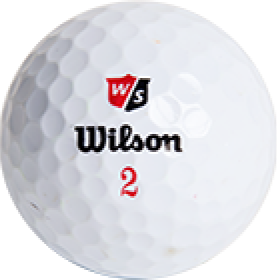
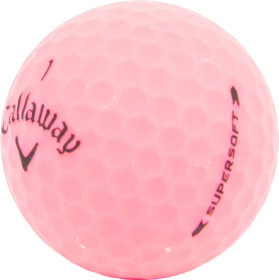



Playing Different Golf Balls Throughout your Round is Hurting your Scores
-
 Sami Mubasher
-


Stop Mixing Models: Why One Golf Ball Is Your Secret to Breaking 80 or 90
We’ve all been there: You push a tee shot into the woods on Hole 3, reach into your bag, and grab whatever soft-cover or distance ball is sitting at the bottom of your pocket.
It feels like a harmless move—after all, a golf ball is just a sphere with dimples, right?
Not quite. If you’re a mid-handicapper grinding to finally break 80 or 90, changing golf ball models mid-round is quietly sabotaging your consistency. While you’re focusing on swing path and tempo, switching golf balls introduces invisible variables that alter your distance control, spin rates, and green-reading touch.
Here is why committing to a single model of golf ball is one of the easiest course-management upgrades you can make.
1. The Tale of Two Holes: Distance Control with Your Irons
Imagine this scenario:
-
Hole 3: You hit a firm, low-spin distance ball. You carry your 7-iron 155 yards, take one hop on the green, and roll out 12 feet past the pin.
-
Hole 4: You hit into the water hazard, so you reach into your bag and pull out a high-spin, premium urethane tour ball. Facing another 7-iron from 155 yards, you strike it cleanly—but this ball spins significantly more. It carries only 150 yards, grabs the front of the green, and stops immediately.
You struck both irons identically, yet one ball landed 12 feet long and the other ended up 15 feet short.
When you swap golf balls mid-round, your distance dispersion expands dramatically. Two-piece ionomer balls launch higher with lower spin, while multi-layer urethane balls spin harder off the grooves. Changing ball construction mid-round forces you to play a guessing game with your yardages.
2. Green-Reading and Short-Game Touch
Golf is a game of feedback. Around the greens, your brain relies on visual cues (how fast the ball releases) and auditory cues (how soft or firm the ball feels off the face) to calibrate touch.
Key Takeaway: Consistent feedback builds reliable feel. Changing ball cover materials breaks the feedback loop, throwing off your distance perception on pitches, chips, and putts.
-
On Chips: A soft urethane ball grabs aggressively on pitches, whereas a distance ball will release down the slope.
-
On Putts: High-compression balls feel firm and jump off the putter face; low-compression soft balls feel muted and require a slightly firmer stroke to achieve the same distance.
If your short-game feel is constantly recalibrating every time you change balls, you'll struggle with distance control on three-footers and lag putts all afternoon.
3. How to Choose Your Single Golf Ball Model
Breaking 80 or 90 isn't about buying the most expensive tour ball—it's about finding one ball that matches your game and sticking with it exclusively.

Use this 3-step strategy to select your permanent golf ball:
Step 1: Work from the Green Backwards
Choose a ball based on short-game performance rather than driver distance. Most mid-handicappers lose shots inside 100 yards, not off the tee.
-
Prioritize Green-Side Control: Look for a ball that gives you predictable stopping power on wedge shots.
-
Match Putter Feel: Test 2–3 options on the putting green to see which firmness gives you natural distance control.
Step 2: Match Your Compression & Budget
-
Moderate Swing Speeds (85–95 mph): Mid-compression 3-piece balls offer optimal driver launch without feeling hard on short shots.
-
Higher Swing Speeds (95+ mph): Premium tour-level compression provides low driver spin and high wedge control.
-
Budget Realism: Pick a ball you can afford to lose. If losing a $4 tour ball makes you nervous over water, switch to a reliable $2 mid-tier model so you swing with confidence.
Step 3: Buy in Bulk and Stick to It
Once you pick a ball, buy a few dozen and commit to playing only that exact model for the entire season.
The Verdict
Course management is about removing unnecessary risk and unpredictable variables. Swapping ball models during a round adds a variable you can easily eliminate.
By committing to a single golf ball model, every iron shot, pitch, and putt will react predictably—giving you the consistent performance needed to consistently break 80 or 90.