







How to Find Your Ideal Golf Ball Compression Match
-
 Sami Mubasher
-


Golf Ball Compression Decoded: Matching Your Swing Speed to the Right Core
If you’ve walked down the golf ball aisle lately or scrolled through online gear forums, you’ve likely seen the blanket advice: "Soft balls feel amazing and go farther."
It’s easy to buy into the myth that softer is always better. Soft golf balls feel like butter off the putter face and offer a plush feel on short irons. But if you’ve noticed your driver shots ballooning, stalling out, or falling well short of your expected carry distance, your golf ball's compression rating might be completely out of sync with your swing speed.
Finding the right core compression isn't about preference—it’s about transfer of energy. Here is how golf ball compression actually works, why "soft" might be robbing you of distance, and how to match your driver swing speed to popular golf ball models on the market today.
The Myth: Why "Softer Is Always Better" Hurts Your Distance
The idea that soft golf balls give every player more distance comes from a misunderstanding of how energy transfers at impact.
When your driver head strikes the ball, the ball deforms (compresses) against the clubface before launching off.
-
If a ball is too soft for your swing speed: You over-compress the core. The spring-like energy transfer breaks down, resulting in excessive spin, lower ball speed, and lost carry distance.
-
If a ball is too firm for your swing speed: You can't compress the core enough to activate its potential, making the ball feel like a rock and leaving yards on the tee box.
Matching compression to swing speed ensures the core compresses just enough to store and release maximum kinetic energy without "pancaking" or remaining inert.
Golf Ball Compression & Model Lookup Guide
Use this reference guide to match your driver swing speed with the target compression rating and popular real-world golf ball models.
| Driver Swing Speed | Target Compression | Ball Category | Popular Models |
| Under 85 mph | 30 – 60 | Low / Soft Compression |
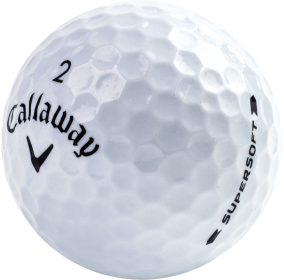
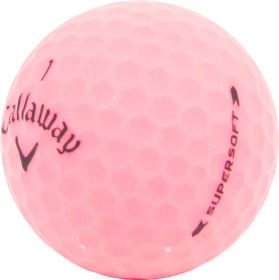
Callaway Supersoft (~38) Titleist TruFeel (~50) TaylorMade Soft Response (~50) Srixon Soft Feel (~60) Wilson Duo Soft (~40) |
| 85 – 100 mph | 65 – 85 | Mid Compression |
Titleist Tour Soft (~65) & AVX (~80) TaylorMade Tour Response (~70) Srixon Q-Star Tour (~72) Callaway ERC Soft (~75) Bridgestone Tour B RX / RXS (~75) |
| 100+ mph | 90 – 100+ | High / Tour Compression |
Titleist Pro V1 (~87–92) & Pro V1x (~98–100) TaylorMade TP5 (~87) & TP5x (~97) Callaway Chrome Tour (~87–90) & Chrome Tour X (~98–100) Srixon Z-Star (~90) & Z-Star XV (~102) Bridgestone Tour B X / XS (~88–98) |
How to Find Your Ideal Compression Match
1. Swings Under 85 mph: Maximizing Energy Transfer
If your driver swing speed is under 85 mph, high-compression Tour balls like the Pro V1x or TP5x will feel dead off the clubface because your clubhead speed doesn't produce enough force to compress a hard core.
-
Target Compression: 30 to 60
-
Go-To Models: Callaway Supersoft, Titleist TruFeel, TaylorMade Soft Response, Srixon Soft Feel
-
The Result: Low-compression 2-piece balls allow slower swings to deform the core fully, yielding lower driver spin, maximum energy transfer, and effortless launch height.
2. Swings Between 85–100 mph: Finding the Balance
This range covers the majority of amateur golfers. If you fall in this bracket, playing an ultra-soft sub-50 compression ball can decrease driver ball speeds, while a 100+ compression Tour ball can feel harsh and yield flat, low carry numbers.
-
Target Compression: 65 to 85
-
Go-To Models: Titleist AVX / Tour Soft, TaylorMade Tour Response, Srixon Q-Star Tour, Callaway ERC Soft
-
The Result: Multi-layer urethane/ionomer designs in this bracket keep driver spin under control for a penetrating trajectory while providing optimal green-side control.
3. Swings 100+ mph: Controlling Spin & Velocity
Fast swingers generate immense force at impact. Playing a low-compression ball with a 105 mph swing speed causes over-compression—leading to excess backspin, ballooning ball flights into the wind, and a noticeable loss in total distance.
-
Target Compression: 90 to 100+
-
Go-To Models: Titleist Pro V1 / Pro V1x, TaylorMade TP5 / TP5x, Callaway Chrome Tour / Tour X, Srixon Z-Star / Z-Star XV
-
The Result: High-density, multi-layer cores withstand high impact velocity, delivering low driver spin, explosive ball speeds, and tight dispersion.
Quick Fitting Advice: On-Course Test
Don't have access to a launch monitor like TrackMan or GCQuad right now? Here is a practical two-step test you can do during your next practice round:
-
Check Your Peak Height: Hit 5 drives with a low-compression ball (like a Callaway Supersoft) and 5 with a mid/high-compression ball (like a TaylorMade Tour Response or Pro V1). If your drives climb high into the air and seem to "drop out of the sky" with zero roll, your ball is likely too soft for your swing speed.
-
Listen to the Sound at Impact: A dull "thud" often indicates over-compression, whereas a firm, crisp "crack" means the core is reacting properly to your swing force.
Stop choosing your golf ball based solely on soft feel. Fit your core compression to your actual driver speed, optimize your launch numbers, and watch your carry distance climb back to where it belongs.