








Golf Ball Compression Explained: Which Compression Should You Play for Your Swing Speed
-
 Sami Mubasher
-


Introduction
You’ve probably heard it on the range: “You need a low-compression ball” …or the opposite: “Tour balls go farther.”
Here’s the truth: golf ball compression matters—just not in the way most people think. Compression is basically how much the ball’s core deforms (“squishes”) at impact, and the amount of deformation changes with club speed, club type, and the ball itself.
The problem? Golfers often chase a compression number instead of choosing what actually helps them score: better launch, tighter dispersion, and consistent feel. So let’s make this simple and practical—by the end of this guide, you’ll know exactly what compression range to try based on your swing speed, and which balls make the most sense if you want performance without paying brand-new prices.
What is golf ball compression (in plain English)?
Compression has two common meanings in golf:
-
A design measurement (how “soft” or “firm/stiff” the ball is as an object)
-
What happens at impact when the ball compresses against the clubface
A key detail most people miss: there isn’t one universal compression standard. Different companies measure it differently, so treat compression numbers as a helpful guideline, not a law of physics.
Why compression can change your shots
Compression tends to influence three things golfers actually feel on the course:
1) Feel (especially on putts and chips)
Lower-compression balls often feel softer. Higher-compression balls can feel firmer. Feel isn’t “better,” it’s preference—but confidence matters.
2) Launch and speed (mostly for slower swingers)
If you’re not compressing a firmer ball enough, you may not get the launch/ball speed you could from a more “easily compressed” ball. Many guides recommend lower compression for golfers with slower swing speeds for this reason.
3) Spin tendencies (the misunderstood part)
Compression alone doesn’t control spin—construction and cover matter a lot (urethane vs ionomer, layers, dimple design, etc.). Still, matching a reasonable compression range to your speed can help you find a ball that launches and reacts more predictably.
The swing speed reality check (most golfers aren’t “tour speed”)
A big reason golfers overbuy “tour” balls: they assume they swing like tour players.
In testing/guide context, Golf Monthly notes that the mid-handicap average driver swing speed is about 93.4 mph, and that lower-compression balls can be a better fit for golfers below that.
Translation: a huge chunk of golfers should at least try low-to-mid compression before defaulting to the firmest tour options.
Quick compression guide by swing speed
Because compression numbers vary by brand, think in ranges:
If your driver swing speed is under ~85 mph
Try: low compression (~35–65)
You’re usually best served by a ball that’s easy to compress and launches with less effort. Many compression charts place very soft models in this band.
Clean Green picks to try:
-
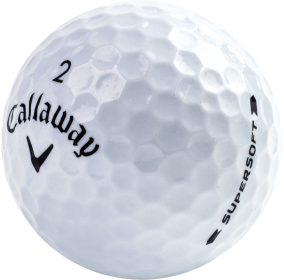
Callaway Supersoft (low compression feel + easy launch): https://cleangreengolfballs.com/products/callaway-supersoft-mix-1-dozen
-
Titleist TruFeel (soft feel, beginner-friendly): https://cleangreengolfballs.com/products/titleist-trufeel-1-dozen
-
Srixon Soft Feel (great value, very playable): https://cleangreengolfballs.com/products/srixon-soft-feel-1-dozen
If your driver swing speed is ~85–100 mph
Try: mid compression (~65–90)
This is the “sweet spot” for a lot of golfers—enough firmness to feel stable, but not so firm that you leave speed/launch on the table. Common charts place a lot of popular all-around balls here.
Clean Green picks to try:
-
If you like “soft but not mushy,” start with TruFeel or Soft Feel above (great baseline).
-
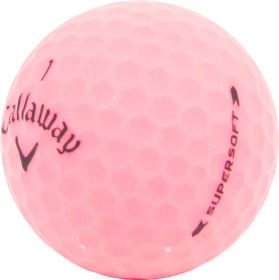
Want a visible option? Supersoft Color Mix: https://cleangreengolfballs.com/products/callaway-supersoft-color-mix
If your driver swing speed is 100+ mph
Try: higher compression (~90–110+)
Faster swingers can more reliably compress firmer balls and often like the stable feel and performance profile in this range. Many charts place tour models like Pro V1 in this neighborhood.
Clean Green pick to try:
-
Titleist Pro V1 (tour-style performance): https://cleangreengolfballs.com/products/titleist-pro-v1-mix-1-dozen
-
Or browse the Pro V1 / Pro V1x collection: https://cleangreengolfballs.com/collections/shop-by-brand/pro-v1-pro-V1x
5 myths about compression (that cost golfers strokes)
Myth #1: “Lower compression always means more distance.”
Not always. Distance depends on strike, launch, spin, aerodynamics, and construction—not just compression.
Myth #2: “Tour balls are automatically longer.”
Tour balls are built for control at high speeds. If you’re not compressing them well, you might not get the “tour benefit.”
Myth #3: “Soft feel = low compression.”
Often correlated, but not identical. Cover material and layers affect feel too.
Myth #4: “Compression ratings are standardized.”
They’re not. Brands measure differently—use compression as a guide, then test on-course.
Myth #5: “You need one perfect compression number.”
You really need a playable range that matches your speed and preferences.
How to find your best compression in 15 minutes (no launch monitor)
Here’s the on-course mini-test that actually works:
-
Pick two balls in different compression bands (example: TruFeel vs Pro V1).
-
Hit 3 drives with each (same target line).
-
Hit 3 short chips with each (same landing spot).
-
Choose the ball that gives you:
-
the tightest dispersion off the tee
-
the most predictable chip rollout
-
the best confidence feel
-
If you want the “budget-smart” version: do this test with reclaimed balls so you can commit to a model without flinching every time there’s water on the right.
FAQs golfers search about compression
What compression should a beginner use?
Most beginners do better with low compression because it’s easy to launch, feels softer, and tends to be more forgiving for real-world swing speeds.
Start here: Supersoft or TruFeel.
What compression do pros use?
Pros often play firmer, tour-style balls—but they also swing faster and prioritize wedge control. Compression is only one piece of why those balls work.
Is compression the same as “soft vs hard”?
Compression influences softness/firmness, but feel is also shaped by cover and construction.
Do I need to match compression to iron swing speed or driver?
Driver is the easiest reference point. But your “best ball” should also feel predictable around the greens.
Conclusion
Golf ball compression isn’t magic—but choosing the right compression range for your swing speed can absolutely make your game feel easier: better launch, better confidence, and more consistent results.
If you want the fastest path:
-
Under ~85 mph: start low compression (Supersoft / TruFeel / Soft Feel)
-
~85–100 mph: test mid compression vs low and pick what tightens dispersion
-
100+ mph: try higher compression tour-style (Pro V1) and compare short-game control
And remember: because compression measurements vary by brand, your scorecard is the final judge, not the number on a chart.